
How Japan Works
Is Ouchi-juku Worth It? Travelers From Abroad and Japanese Visitors Disagree, but Not About What You'd Expect
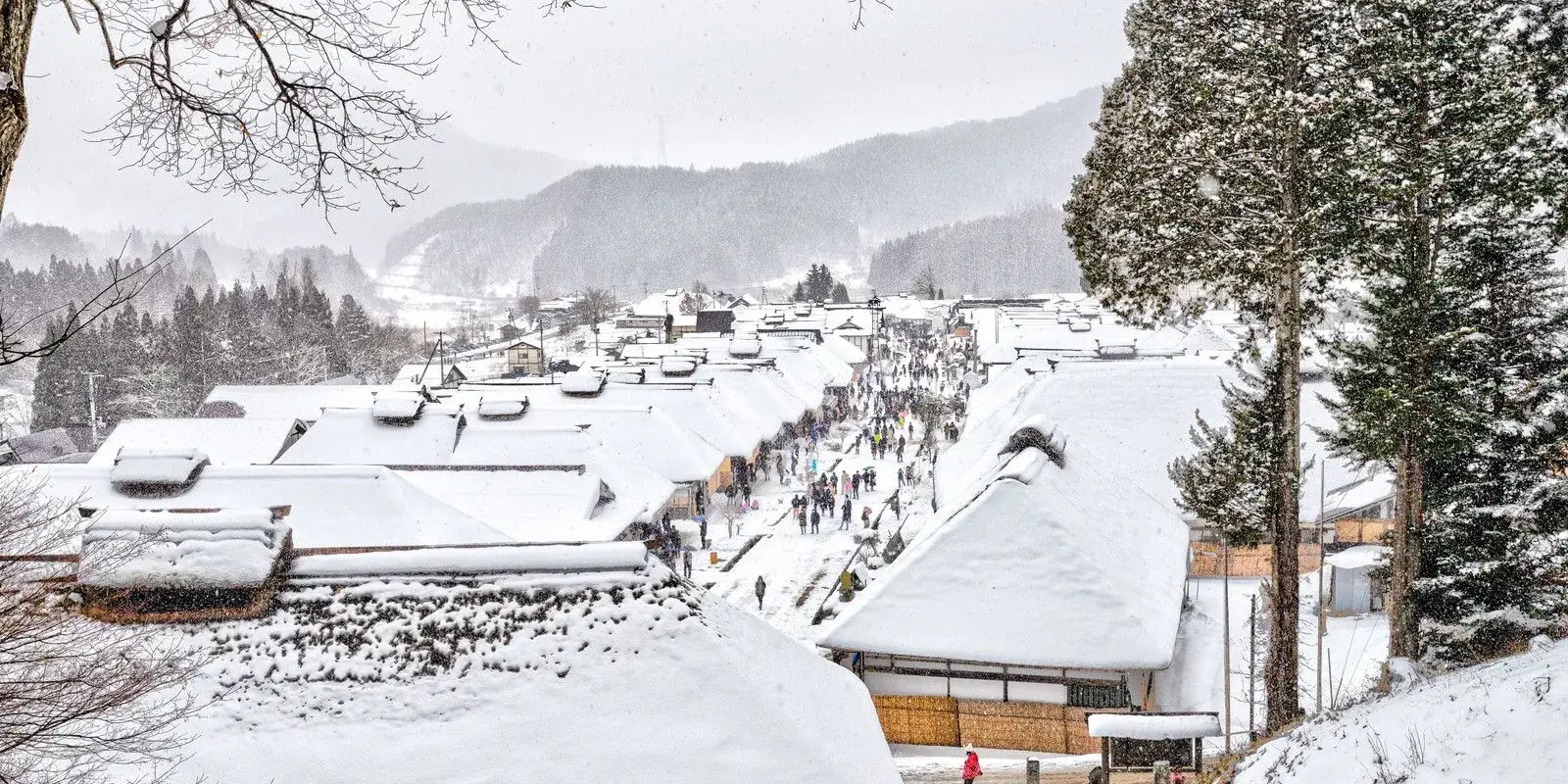
Ouchi-juku is a single street of thatched-roof buildings in the Fukushima mountains, reached by a change onto a rural railway line and a shuttle bus from Yunokami Onsen Station. We gathered 54 posts by travelers from abroad. In 31 of them, the writer was glad they went. In 11, the writer had mixed feelings, and in 12, a little over a fifth, the writer was let down. The 159 Japanese reviews, written on jalan and TripAdvisor Japan, fall into the same three groups but in very different proportions: 106, 42 and 11.
Here is the part that surprised us. Among the 12 travelers from abroad who were let down, 4 give almost the same reason: the street turned out to be mostly shops, more commercial than they'd expected. Among the 11 Japanese reviewers who were let down, 4 say close to the same thing. The two groups aren't disagreeing much about what the problem is, when it shows up. They're disagreeing about how often it shows up at all, since the Japanese reviews run to 159 posts and only 11 land in the red.
Is it worth it? (in travelers' own words)
We gathered posts by travelers from abroad who have been to Ouchi-juku, from TripAdvisor, Google Maps reviews, Reddit, a small English-language travel forum, and the Japan travel board of a Taiwanese online forum. We sorted them by how each writer felt after the trip.
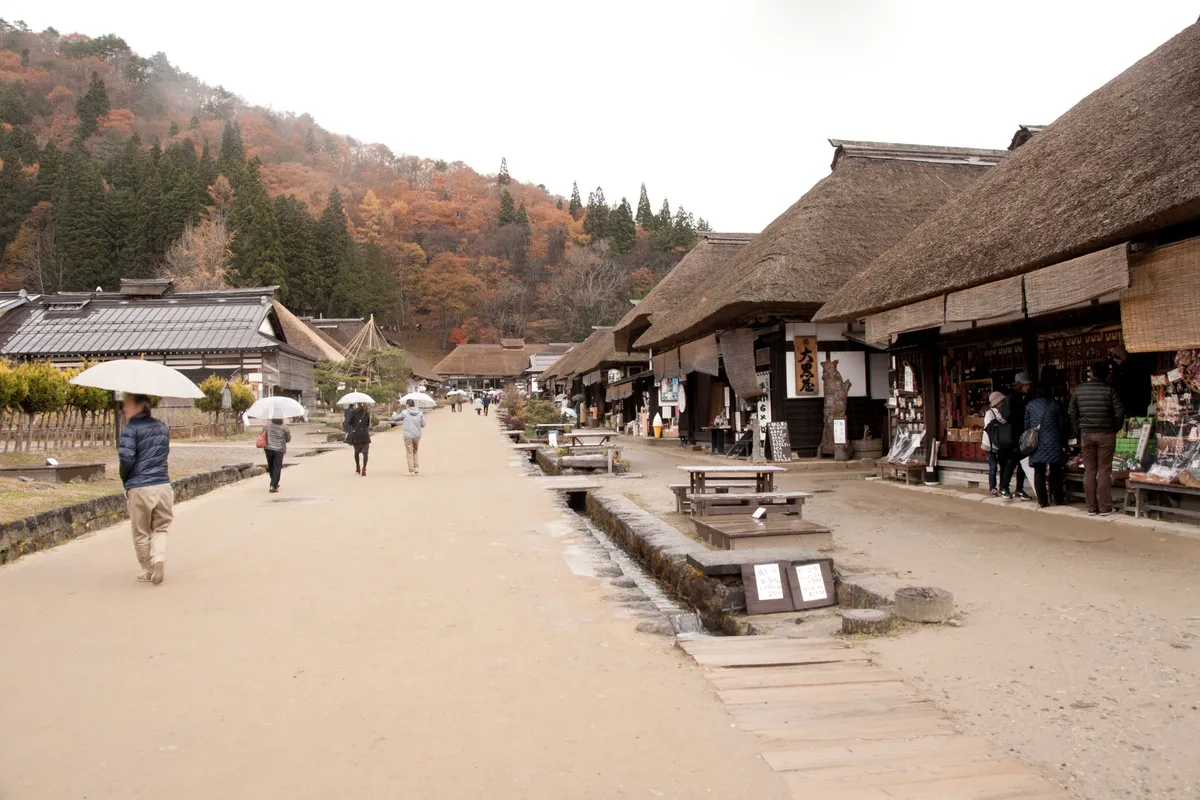
Of the 12 letdown posts, 4 make close to the same complaint: the street is mostly shops. A visitor from Hawaii called it "essentially a shopping arcade catering to tourists" and suggested the Nakasendo trail or the Hida region instead. A visitor from Taipei judged it "not as astounding" as Shirakawa-go's thatched village, more commercial than cultural, since by their count "nearly half of the thatched houses are adopted as diners now, and most diners serve the same item, soba." A visitor from Auckland wrote that more than a couple of tour buses "swamps it," and that "each of the old buildings is a souvenir shop so not great for photos." A visitor from Toronto, excited after a guidebook talked the place up, wrote that "the town is essentially one big gift shop."
The rest of the letdown posts are smaller and more scattered. A visitor from Taiwan, hoping to see the village under its winter snow festival, found no snow that year and judged the whole settlement far smaller than Shirakawa-go, the thatched village they already knew. A visitor from Singapore found "nothing much to see" and called the view "quite normal." A visitor from Finland called it a "waste of time," since it took an hour to get there and thirty minutes to see "one street and one view." On a Taiwanese forum thread where someone else asked whether a summer detour was worth it, two commenters answered that Ouchi-juku and the surrounding area have "沒甚麼特色" (nothing special about them) or look "很普通" (very ordinary) without the snow. One traveler, who otherwise loved nearby Aizu-Wakamatsu, suggested skipping Ouchi-juku for a scenic ride on the Tadami rail line instead. Two more, on a different forum thread, agreed the negi soba's green onion was too sharp for their taste.
About a quarter of the 31 glad-they-went posts describe the same feeling: time travel along the street. "An incredible place which sends you back in time," one visitor from New Zealand wrote, adding a tip: "Just avoid the hoards that come with the sightseeing buses for a really good experience." A visitor from Australia saw it in deep winter snow and called it "very atmospheric," with a quiet pine grove near a small shrine where, they wrote, you can have "your Studio Ghibli moment" as snow drifts between the trees.
What Japanese visitors say
The second gauge comes from reviews that Japanese visitors wrote in Japanese on jalan and TripAdvisor Japan.
Of the 11 letdown reviews, 7 are about logistics or price rather than the street itself. Three are traffic and parking: one writer described the single-file wait at the lot entrance, cars let in and charged one at a time, as "a bad first impression" for a tourist spot, and found the street itself mostly similar soba shops and souvenir shops besides; a second, in a separate jam, wrote that the road was so narrow they couldn't even turn back and called it "truly hell"; a third described a parking attendant who scolded them loudly for easing onto the lot while their car sat exposed on the road behind a slow-paying driver ahead, and left early, unsettled, writing that they'd never go back. Three more arrived to find the shops already closing: one visited on a Wednesday to find "many shops were closed, which was very disappointing," another arrived a little after 2:30pm to find their target soba shop already shut, and a third pulled in at 4:50pm and was told by the parking attendant that the shops were already closed. The seventh, drawn in by a guidebook's promise, found the soba "just average" and the price surprisingly high, and summed the visit up as "not that much, really."
The other 4 make close to the same observation as the comparison-minded travelers above. One reviewer, at one star, wrote that Ouchi-juku "is strictly a streetscape preservation district, not a filming location," and that almost every house had become "a souvenir shop selling the same kind of goods." Another wrote that every building facing the street is a soba shop or a retailer, that "you don't feel any sense of daily life at all," and added, "Some reviews say it's like a movie set, and indeed it is." A third, revisiting after some years, was surprised to find that roughly 70% of the shops had turned into soba restaurants resembling the famous one, and that the nostalgic old-house feeling had faded: "a bit disappointing." The fourth, who visited on a hot, sunny day, called it "basically a row of soba shops and souvenir shops," and added, "Frankly, it wasn't that appealing."
Before you go
What visitors answered
How long they waited to get in
148 people answered on Google Maps (August 27 – November 2, 2026)
- No wait107
- Up to 10 min13
- 10–30 min12
- 30–60 min7
- 1 hr or more9
These are answers to the questions Google Maps asks alongside a review, counted from the newest reviews of this place in every language. They are counts of answers, not a survey, and waits change with the day and the season.
What we wish you'd noticed
Ouchi-juku's main street runs about 450 meters, government-designated as an Important Preservation District since April 1981. Most of what lines it today is shops. One Japanese visitor who drove up put it plainly: the buildings keep their old exterior, but "almost all are now minshuku, souvenir shops, or eateries." A reconstructed honjin building, the former lodge for feudal lords passing through, holds the village's main paid exhibition, and a few of the thatched houses along the street let visitors step inside and look around while they shop. That composition explains roughly a third of both red bars above: travelers hoping for a living-history museum, on either side of the ocean, sometimes find a street of shops instead.
It's also a working village. Residents who live and work along the street maintain a charter not to sell, rent out, or tear down their houses, and the thatched roofs are re-laid by hand by trained thatching craftsmen, with the whole village taking part. Every September 1st, each household sprays water high into the air at the same time, in a simultaneous fire drill, since a thatched roof burns fast once it catches. According to the local tourism association, more than 800,000 people visit in a year.
Season does some of the work that the comparison complaints don't fully explain. Visitors who arrived under snow describe a hushed, dramatic scene, and the two Taiwanese forum commenters quoted above were answering a question about a summer visit when they called it ordinary. But winter isn't a guarantee either: one Japanese visitor arrived in January to find most shops closed, gave up climbing the icy slope to the lookout, and still slipped and fell on the way back down, wishing the village would turn it into a proper staircase; another, also in winter, found only a third of the shops open and suggested autumn leaves or spring greenery as better times to come. There's no single season that guarantees the view; snow raises the odds of it, and also raises the odds of ice on the slope and closed shops.
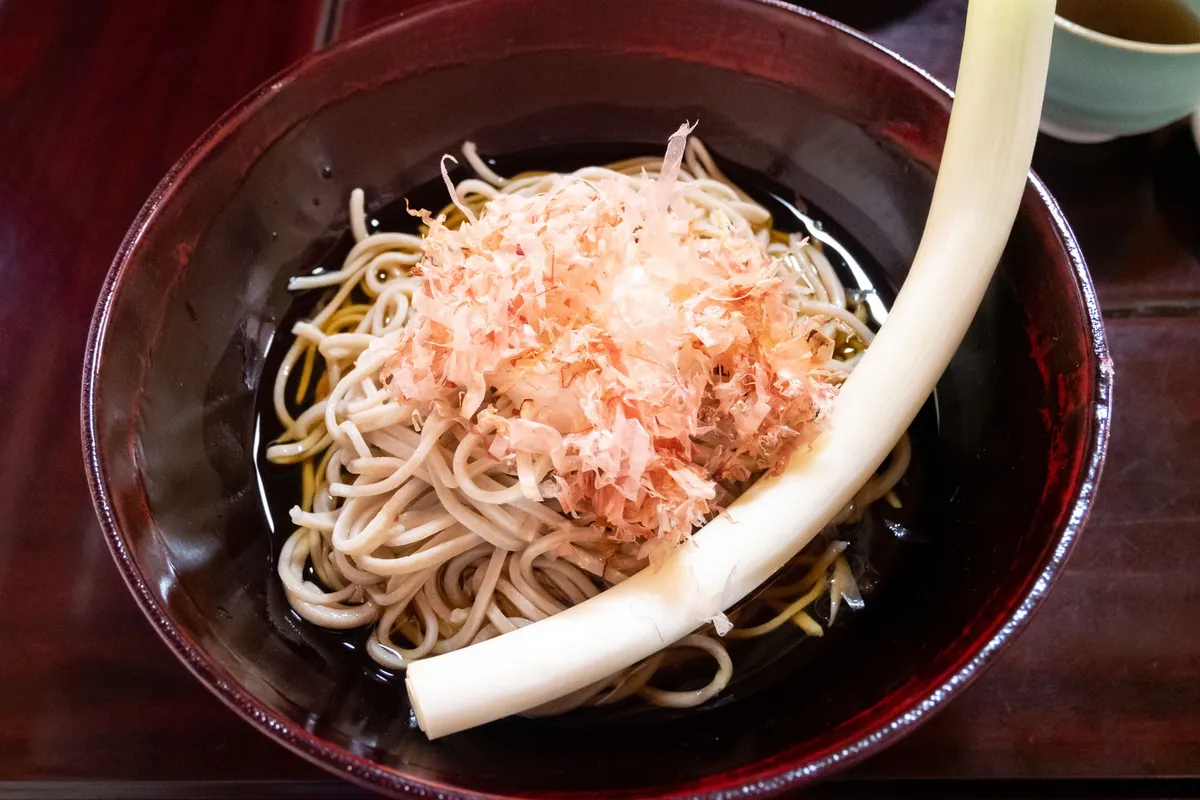
The soba itself, known as Takato soba, traces back to Takato in Nagano Prefecture. According to a national cultural archive, the 17th-century lord Hoshina Masayuki is credited with bringing the recipe north when he came to govern the Aizu domain, and it became Ouchi-juku's signature dish, eaten here by using a single raw green onion as both condiment and chopstick. Most reviewers who mention it enjoyed the noodles themselves; the onion is the part that divides opinion, genuinely fun to try once, and more than one visitor found it too sharp to finish.
Doing it well, the welcomed way
Shop hours run roughly 9am to 4pm by the tourism association's own account, but vary by shop, and several visitors arrived midweek or in the afternoon to find shops already shuttered; the association posts a calendar each month on its site, worth a glance the night before. Parking fills fast on weekends, holidays, and especially Golden Week and Obon, when some visitors report traffic backed up for an hour or more before reaching the lot at all; arriving before 9am, as a couple of reviewers did, meant walking a nearly empty street with the shops still opening around them. Payment at the lot is cash, on the day. The one parking dispute in the Japanese reviews happened while cars queued behind a slow payment at the gate, and a little patience in that kind of queue goes a long way in both directions.
The negi soba is served at many shops along the street, so if the best-known one has a long line, trying whichever isn't backed up keeps more of a short visit intact. If you go in winter for the postcard version of the street, dress for ice on the slope up to the lookout.
Most of all, size the visit correctly going in. One visitor timed the street itself at about half an hour; a longtime Japanese visitor says a quick look still takes under an hour even now. That's not a flaw in the place. It's a reason to treat it as one dense stop on a longer day in the Aizu region rather than the whole of the day, and to walk in already knowing that the hushed, dramatic version of this street belongs mostly to winter.
Still deciding how a stop like this fits into a longer Tohoku route? For a nearby UNESCO-listed shrine complex that rewards the same kind of early start, see our Nikko Toshogu guide, and for more on what actually earns a slot on a short Japan trip, start with what actually matters.
Sources
- Agency for Cultural Affairs, Cultural Heritage Online: Shimogo-machi Ōuchi-juku: government designation as an Important Preservation District for Groups of Traditional Buildings, designated April 18, 1981; roughly 450-meter street length; architectural description (hip-roofed, thatched houses facing the street at regular intervals).
- Ouchi-juku Tourism Association, official site: the resident charter not to sell, rent out, or tear down the houses; thatch-roof upkeep led by trained thatching craftsmen with the whole village taking part; the annual, simultaneous September 1st water-spraying fire drill; general shop hours (roughly 9am-4pm, varying by shop, with a monthly calendar posted online); cash-only, same-day parking payment.
- Ouchi-juku Tourism Association, village history: over 800,000 visitors a year; 1981 designation as an Important Preservation District; the resident charter.
- Ouchi-juku Tourism Association, access and transport: the Saruyugo shuttle bus between Ouchi-juku and Yunokami Onsen Station.
- Shimogo-machi Tourism Corporation, Ouchi-juku Townscape Exhibition Hall: the exhibition hall rebuilt on the site of the former honjin, with photographs and everyday tools from the post-town era on display; paid admission (adults 250 yen).
- Japan Search (National Diet Library / Agency for Cultural Affairs), Ōuchi-juku entry: the Takato-soba origin of negi soba, credited to Hoshina Masayuki's move from Takato (Nagano) to govern Aizu; the dish's dashi-and-grated-daikon broth and green-onion chopstick tradition.
WMJS is written in Japan, in English, with AI help. We check every page, but English is not our first language. If a sentence reads oddly, tell us. One sentence is enough.
Thank you. A person reads every note.
How well do you know Japan?
Built from 635 public posts by Japanese people
Want to know more? Ask Japanese people
Have a follow-up question about this topic? We'll ask real Japanese people.
Voice Box →