
How Japan Works
Is Mount Hiei Worth It? What Visitors From Abroad and From Japan Say
Mount Hiei sits on the border of Kyoto and Shiga, and Enryaku-ji, the head temple of the Tendai school, has its halls in three areas on the mountain. They are the East Pagoda area (Todo), where the main hall stands, the West Pagoda area (Saito) and Yokawa. If you're planning a day trip from Kyoto, you may be wondering whether a day there is worth the fares, the ride up by cable car or toll road, and the walking at the top. We counted 323 reviews and posts from people writing about their own visits. Of the 198 voices from abroad, 154 (78%) were glad they went. Of the 125 voices from Japan, 105 (84%) were glad they went.
If the main hall is your reason to come, read the temple's notice first. Its notice of October 22, 2026 says visits inside the main hall, the Konpon Chudo, stopped in January 2026 for about two years. Among the Japanese voices that mention the renovation and have a posting date, 39 of the 40 were posted in 2025 or earlier, before visits inside the hall stopped.
Is it worth the trip? (in visitors' own words)
We read reviews and posts by people from abroad and sorted them by how the writer felt after the visit. Of the 198 voices, 94 are Google Maps reviews, 38 of them from 2026. Another 69 are TripAdvisor reviews of visits from 2011 to 2026, 51 of them from 2015 to 2019. 28 are posts on a Taiwanese forum, and 7 are Reddit comments. We took reviews from the Mount Hiei pages and from the Enryaku-ji pages.
Some glad visitors write about the quiet. A TripAdvisor reviewer in July 2025 wrote "Saw fewer than 50 people over four hours on the mountain", and another, from May 2025, called it a place that "feels very secluded on a high hillside forest." Others say it was worth it. A Google Maps reviewer in November 2026 wrote "Totally worth the 1,000 yen entrance fee." A Reddit commenter who hiked up from Sakamoto around 2024 wrote "Overall it was such a highlight of my trip and it's so worth it!"
In 2019, someone on the Taiwanese forum asked whether the mountain was crowded. More than 40 replies followed, and we kept the 20 in which the writer says they went and when. Nineteen of the 20 found few people, and their visits cover all four seasons. The other found few people on one visit and a very large crowd in the maple season a year later. Two of the writers who found few people also said how they felt. One called it wonderfully quiet and the other felt completely at ease, so those two are in the glad band. The other 18 replies only say how busy or quiet it was, so they are in the middle band.
Nine voices were let down and 35 are in the middle band. Eight of those 44 complain about cost, and five of the eight name the cable car fares. A Google Maps reviewer in November 2025 wrote "The cable was kinda pricy!", and a reviewer in September 2026 who listed the cable car fare, a bus fare and the temple entrance fee called it "all very expensive to get a cloudy view of the lake." Others write about what there is to see. A 2021 TripAdvisor reviewer "found it underwhelming" and thought it suited a spiritual retreat better than tourism. A Taiwanese forum poster, writing in April 2026 after a visit when the main hall was under renovation, found little to see apart from a lot of walking and named two other temples in Otsu as the better stops.
What Japanese visitors say
Japanese visitors have also written about Mount Hiei, and this is how the 125 voices we gathered fell.
Some glad visitors write about the air and the green. "空気も澄んでいて浄化され、心も癒されます。" (The air is clear, it feels purifying, and my heart is soothed), a jalan reviewer wrote in November 2026. A June 2026 reviewer who went round all three areas wrote "西塔と横川は参拝者が少ないのですが、建物も緑の木々もきれいでした。" (There are few worshippers at the West Pagoda area and Yokawa, but the buildings and the green trees were beautiful). A jalan reviewer who went in a hot summer wrote "猛暑の夏でも嘘のように爽やかで、散策が苦になりませんでした。" (Even in the intense summer heat it was unbelievably fresh, and walking around wasn't a chore).
Two TripAdvisor Japan reviewers who came in mid-November 2019 found it crowded. One came on a weekday and wrote "とても混雑していて" (very crowded), and the other came on a Saturday and found the shuttle bus "ギュウギュウ詰め" (packed tight).
Of the 125 Japanese voices, 11 are in the middle band and 9 were let down, 20 in all. Seven of the 20 object to the cost, and five of the seven name the toll road to the top. One reviewer paid 3,140 yen round trip from the Kutsuki side. Another lists 2,430 yen just to drive through and 3,270 yen round trip. Seven of the 20 say the renovation spoiled part of the visit. One reviewer was disappointed that the weather spoiled the view they had hoped for.
What's closed during the main hall renovation
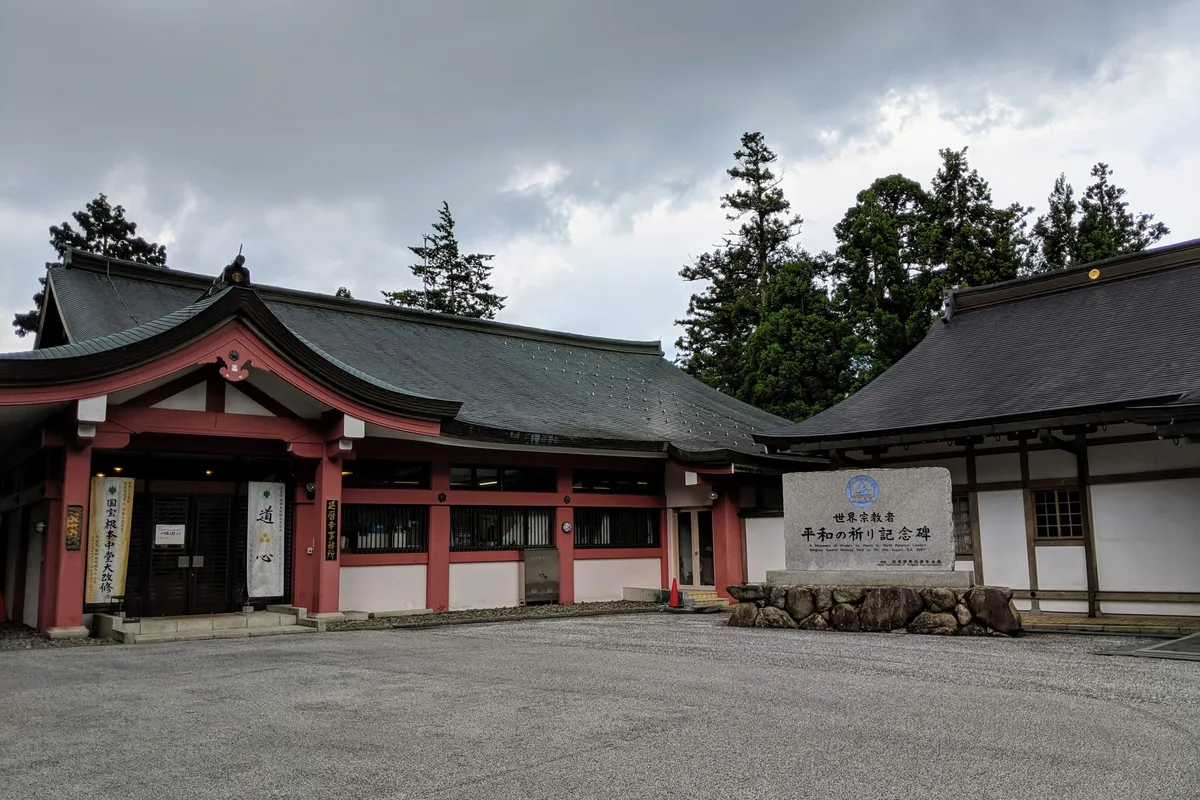
The temple's notice of October 22, 2026 says the Konpon Chudo is in a 15-year renovation that began in 2016, and that visits inside the hall stopped in January 2026 for about two years. Two things from the hall are at the nearby Manpai-do hall for this period: the Eternal Flame, and the figure of Yakushi Nyorai that stands in for the main image of the Konpon Chudo. The notice says you can pray closer to them there than you could inside the main hall. The twelve guardian statues that flank the main image are due to be shown in the National Treasure Hall in the East Pagoda area until December 2027, for an extra admission fee. According to the notice, a platform for viewing the roof and painting work, which the three-area ticket covered, was set to close at the end of November 2026, ahead of the dismantling due to start in December. It adds that the special guided visit to the work site held in 2026 is the last one.
Reviews describe the hall at earlier points in the work. Of the 125 Japanese voices, 51 mention the renovation, and 40 of the 51 were glad, 8 in the middle band and 3 let down. Forty of the 51 have a posting date, and one of these dated reviews was posted in 2026, in May. Ten of the 198 voices from abroad mention it, 9 of them glad, and 4 of the 10 were posted in 2026. A Japanese reviewer who found the hall wrapped in steel framing wrote "さすがに少しがっかりしました。" (I was a little disappointed, as you would expect), and then "普段は見られない工事現場を真近に見ることができある意味ラッキーでした。" (I could see up close a work site you normally can't see, so in a sense I was lucky). Another wrote of the viewing platform "屋根の銅板のきれいさや、板がきれいに敷き詰められてて、見ることができてよかったです。" (I was glad to see how beautiful the copper roof plates were and how neatly the boards were laid). Some reviews describe going inside the hall, but visits inside stopped in January 2026, so if the main hall is your reason to come, check the temple's latest notice before you go.
Getting up the mountain
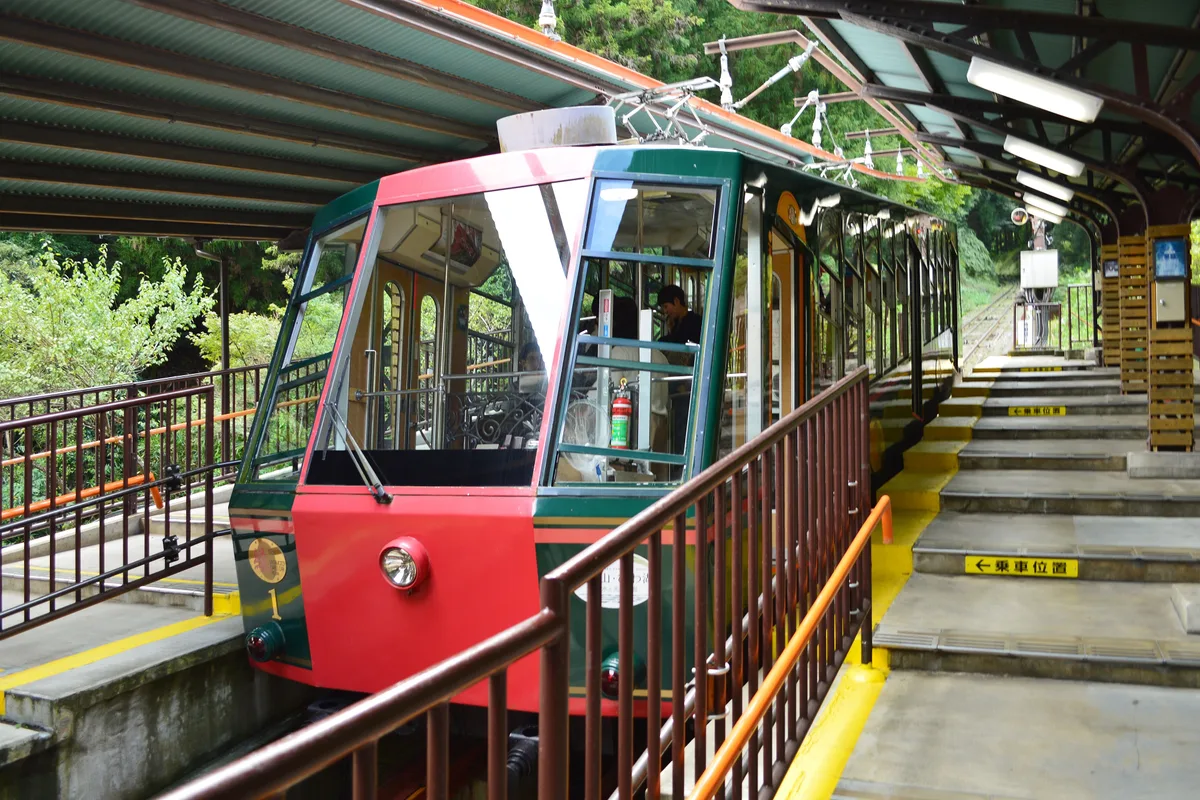
The temple lists routes by public transport and by car. From Kyoto Station, the Hieizan Drive Bus takes about 70 minutes. From Demachiyanagi, the Eizan Electric Railway, cable car, ropeway and shuttle bus take about 70 minutes. From the Sakamoto side, the Sakamoto cable car route takes about 40 minutes. The temple notes that the shuttle bus between the areas doesn't run in winter. On fares, a Google Maps reviewer in November 2025 wrote "The cable is ¥600 and ropeway is ¥400." A Google Maps reviewer who visited in January 2025 wrote that during winter "you can only access here from Cable Sakamoto Station which is Biwa Lake side", and a poster on the Taiwanese forum who went at the start of 2026 found the cable car on the Kyoto side suspended for winter and could only go up from Sakamoto. A reviewer who came on October 10, 2026 found a cable car or the ropeway closed (the review doesn't say which line), so you may want to check the operators' notices the day before.
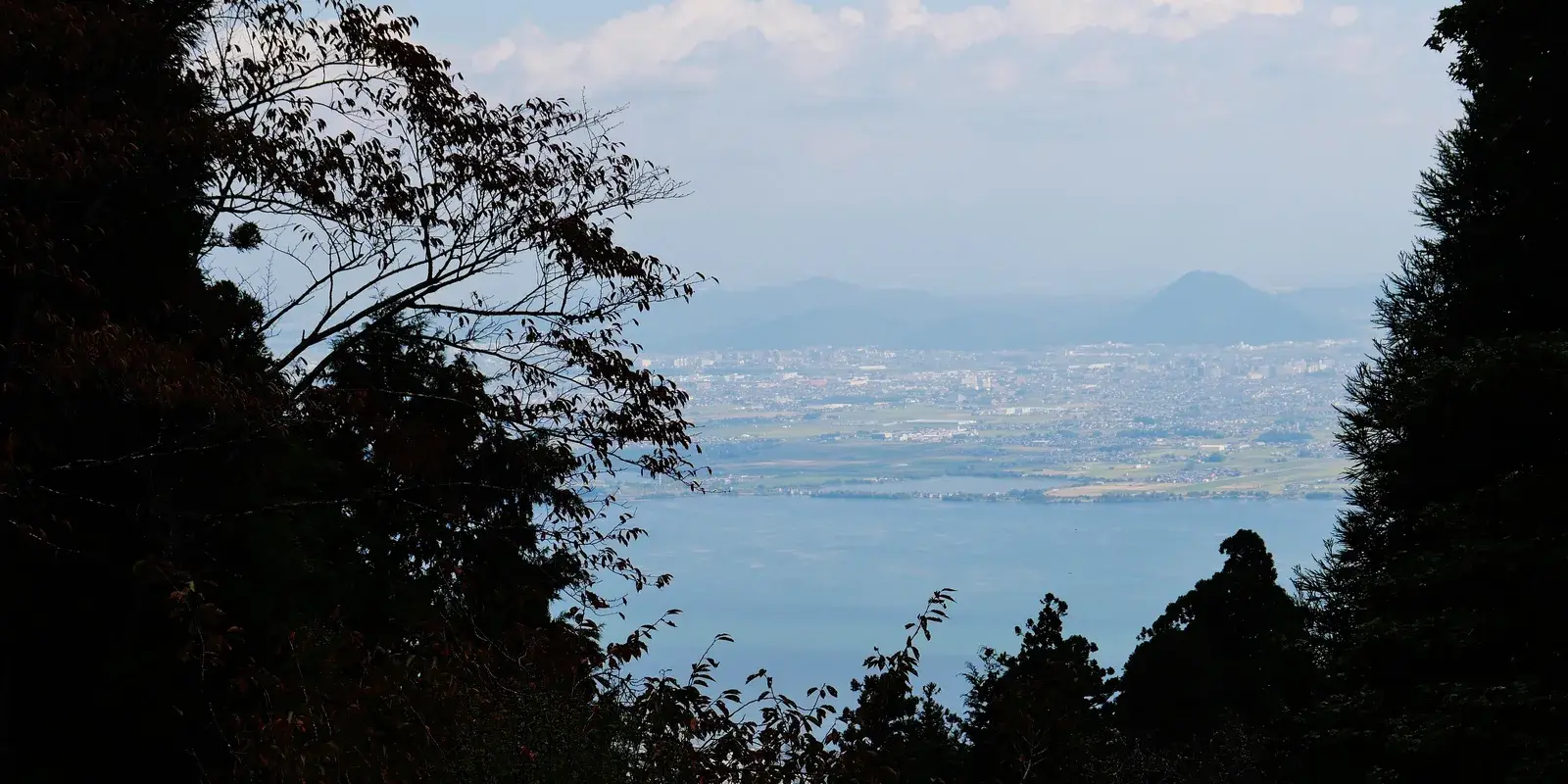
On a cloudy day, you may not see the lake. A reviewer in July 2024 called the mountain "a very refreshing change from the city of Kyoto" despite a day with "absolutely no view". A jalan reviewer in spring 2026 couldn't see the lake well from the station in light rain and, because the last cable car was at 17:30, visited only the East Pagoda area.
Doing it well, the welcomed way
The temple lists the East Pagoda area and the temples at the foot of the mountain, Shiga-in and Shogen-ji, as open 9:00 to 16:00 all year. It lists the West Pagoda area and Yokawa as open 9:00 to 16:00 from March to November, and 9:30 to 16:00 in January, February and December. Reception closes at 15:45. One reviewer who arrived at 15:30 in March 2026 skipped the East Pagoda area and visited only the West Pagoda area, and wrote that the West Pagoda area, with more historic atmosphere, may have been the better choice. One ticket covers the three areas, at 1,000 yen for adults, 600 yen for junior high and high school students and 300 yen for elementary school students. The National Treasure Hall is 500 yen for adults, and the temple's notice of October 8, 2026 lists a closure there for an exhibit change on December 8, 2026. The temple says you pay at the reception desks in the areas, and it also sells tickets online. One Japanese reviewer was asked for the ticket at Yokawa. The reviewer remembers being asked on an earlier visit too, and on the walk back from the West Pagoda area to the East Pagoda area, and suggests showing it before staff ask.
A Japanese reviewer who walked and used the shuttle bus spent 60 minutes in the East Pagoda area, 40 in the West Pagoda area and 50 in Yokawa, about 210 minutes in all including waiting for and riding the bus. The walking added up to about 4.5 km. Two of the Japanese voices say the East Pagoda area alone is enough, and both were glad. Nine of the Japanese voices advise that a visit to all three areas takes about a day or more.
Reviewers write about shoes and walking. A Japanese reviewer in April 2026 wrote that just moving around the East Pagoda area takes a fair amount of energy, and recommends shoes that are easy to walk in. In a trip report on the Taiwanese forum in June 2023, a writer who had been walking 20,000 steps a day wrote that even from the top of the cable car there were still 2 km to walk to the temples, and went to the flower garden museum instead. A June 2025 Google Maps review describes hiking to the top "constantly on the lookout for bears due to the warning signs along the trail". A TripAdvisor Japan reviewer in 2019 who walked up from Hiyoshi Shrine also saw signs about bear and boar sightings, and suggests making some noise when walking early in the morning.
On food, a TripAdvisor reviewer in September 2015 wrote "You can get food and drinks up here but selection is limited." A Taiwanese forum poster who came in the snow in February 2017, when by the poster's account only the Sakamoto cable car was running and the buses were not, wrote "山上沒得吃請自己帶麵包" (there is nothing to eat up on the mountain, please bring your own bread). The temple also runs a guest house that offers stays and meals.
Traveling around Kyoto? Is Kibune worth it collects voices on another mountain stop north of the city, and the Ginkaku-ji guide and the Kinkaku-ji guide cover two well-known temples in northern Kyoto. For how we think about choosing what to do in Japan, see what actually matters.
Sources
- Enryaku-ji, Hieizan Enryaku-ji (天台宗総本山 比叡山延暦寺): its location on the border of Kyoto and Shiga, the three areas, and the guest house with stays and meals.
- Enryaku-ji, notice of October 22, 2026: special enshrinement during the Konpon Chudo renovation (根本中堂ご本尊薬師如来御前立、不滅の法灯、ご本尊眷属十二神将像 特別奉安): the 15-year renovation from 2016, the closure of the inside from January 2026 for about two years, the Eternal Flame and the stand-in main image at Manpai-do, the twelve guardian statues at the National Treasure Hall until December 2027 as planned, the viewing platform open until November 2026, dismantling from December 2026, and the 2026 special site tour being the last.
- Enryaku-ji, hours and admission (巡拝時間・料金): opening and closing times by area and season (9:00 to 16:00, and 9:30 to 16:00 in some months), reception until 15:45, the three-area ticket at 1,000, 600 and 300 yen, the National Treasure Hall at 500 yen, payment at the reception desks and online sales.
- Enryaku-ji, access (交通案内): the routes from Kyoto Station, Demachiyanagi and Sakamoto with times of about 70, 70 and 40 minutes, and the shuttle bus not running in winter.
- Enryaku-ji, National Treasure Hall temporary closures (国宝殿 臨時休館のお知らせ): the exhibit-change closures, including one on December 8, 2026.
Reviews and posts are voices, so they aren't listed as sources here. Dates, prices and times in them are as the reviewers gave them, so please check before relying on them: visits and posts from 2011 to 2026, including 2020, 2021, 2023, 2024 and 2025, toll fees from about 1,700 yen to over 3,000 yen, with figures of 3,140, 2,430 and 3,270 yen, the Eizan cable car at 600 yen and the ropeway at 400 yen, the Sakamoto cable car as the only line running in winter, and a last cable car at 17:30. The temple's hours, fees and notices are as listed on its pages on November 27, 2026.
WMJS is written in Japan, in English, with AI help. We check every page, but English is not our first language. If a sentence reads oddly, tell us. One sentence is enough.
Thank you. A person reads every note.
How well do you know Japan?
Built from 635 public posts by Japanese people
Want to know more? Ask Japanese people
Have a follow-up question about this topic? We'll ask real Japanese people.
Voice Box →