
How Japan Works
Is Gokayama Worth It? What Visitors From Abroad and From Japan Say
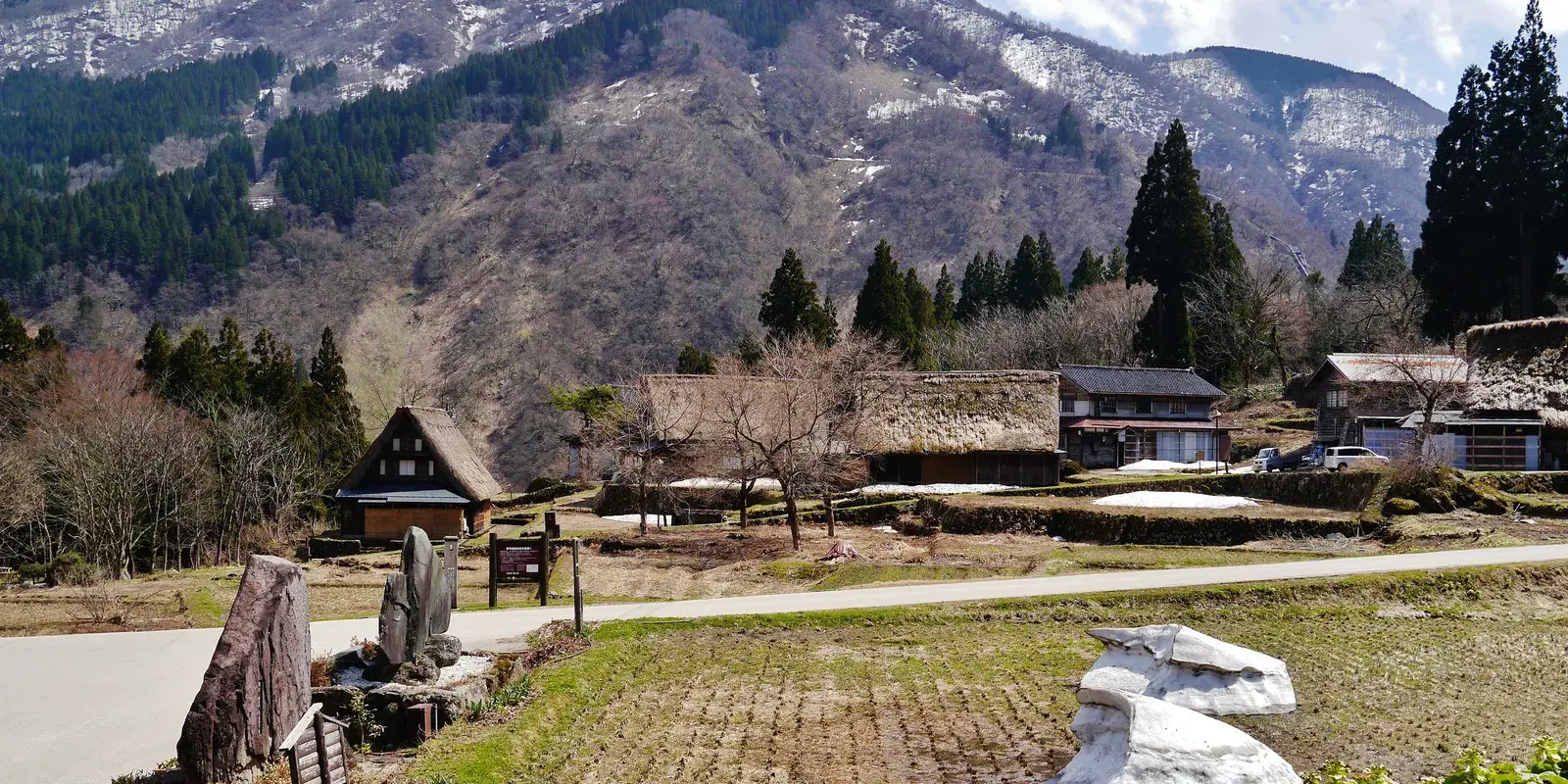
Gokayama is the Toyama Prefecture part of the UNESCO listing "Historic Villages of Shirakawa-go and Gokayama", inscribed in 1995. The listing covers three villages: Ogimachi in the Shirakawa-go region, and Ainokura and Suganuma in the Gokayama region. The official Gokayama tourist site describes Gokayama as 40 small villages, and says two of them, Ainokura and Suganuma, are on the World Heritage list. If you are weighing a detour from Shirakawa-go, Takayama or Kanazawa, these are the words of visitors who went: we counted 217 reviews and posts. Of the 91 voices from abroad, 82 fell in the "glad they went" band, and so did 110 of the 126 from Japan: 90% of the 91 and 87% of the 126.
Is it worth the trip? (in visitors' own words)
Of the 91 voices from abroad, 50 are TripAdvisor reviews, 36 are Google Maps reviews and 5 are posts and comments on a Taiwanese travel forum. The TripAdvisor reviews are older and the Google Maps reviews are newer: 40 of the 50 TripAdvisor reviews are for visits in 2014 to 2020, and the 36 Google Maps reviews were posted between May 2025 and November 2026.
38 of the 91 voices name Shirakawa-go, and 30 of those 38 say the Gokayama village was quiet or had few tourists, or that it was quieter or less crowded than Shirakawa-go. A TripAdvisor reviewer who rented a car in May 2019 wrote "Much more peaceful than Shirakawa-go, and it was worth the cost of the rental car." Another, who came to Suganuma in April 2019, wrote "so peaceful after the crowds of Shirakawa-go". A Google Maps reviewer who first posted in May 2025 wrote "Very quiet atmosphere compared to Shirakawago which is always packed with tourists." A TripAdvisor reviewer who visited Suganuma in August 2023 wrote "Much preferable to Shirakawa-go, which has become too touristy".
Reviewers wrote about timing. The May 2019 reviewer wrote that after lunch "the tour buses started arriving, though admittedly only one or two." A TripAdvisor reviewer who stayed the night in March 2023 wrote "The best time in the mornings to walk around would be before 9am before the busloads of tourists come into the village." A reviewer at Ainokura in April 2019 wrote that going earlier in the morning "seemed to avoid the tour groups which arrived as we left". A reviewer in May 2018 who arrived at about 10:30 wrote "there were no tour buses and hardly any people."
6 of the 91 voices describe staying the night in the village. A TripAdvisor reviewer in December 2019 wrote of a guesthouse dinner and breakfast "next to the sunken hearth" and of a family museum upstairs. A reviewer in January 2019 wrote "Try to stay one night because these old traditional Japanese houses are quite exceptional." and also, of the shared bathroom, "However inconvenient that may be, it was still worth it." A reviewer in November 2018 wrote "It might be because I stayed the night, but I barely saw any other tourist the entire time I was there."
Reviewers also wrote about how long the village takes. The November 2018 reviewer wrote "The whole village can be explored in under an hour, but you might want to sit around and breathe in the crisp air." The March 2023 reviewer wrote that the whole community "can be covered in less than 2 hours". Reviewers on the Taiwanese forum wrote about the same villages. A post from December 2025 called Ainokura a very cute little village. A travel report posted in 2011 called the mountain village a secluded paradise. A poster in 2012 who stayed near Suganuma on a lighting night wrote that it was not over-commercialized the way Shirakawa-go is.
What visitors from Japan wrote
Of the 126 voices, 54 are Jalan reviews, 32 are Japanese-language TripAdvisor reviews, 31 are Google Maps reviews, 7 are YouTube comments and 2 are answers on a Japanese Q&A site. 47 of the 126 voices name Shirakawa-go.
A Jalan reviewer who visited Ainokura in March 2026 wrote "日本の原風景を感じました。" (I felt Japan's original landscape) and thanked the residents for keeping the place up. Another, who visited in March 2024, wrote "相倉合掌造り集落の方が原風景っぽく好きです。観光客も少ないので穴場だと思います。" (I prefer Ainokura for its original-landscape feel, and with few tourists I think it is a hidden spot). A Jalan reviewer who visited on a Sunday wrote "白川郷は入り口から長蛇の列。駐車場がいっぱいでした。" (At Shirakawa-go there was a long line from the entrance and the parking lot was full), and then called Gokayama quiet. A Google Maps reviewer who posted in August 2026, visiting Suganuma around noon in the Obon holidays, wrote "白川郷の賑わいとは比べられないくらい、人もまばらでゆっくりと見ることができました。" (People were so few that it was nothing like the bustle of Shirakawa-go, and I could look around at leisure).
Some say what the village is for them. A Jalan reviewer on their fourth visit wrote "いつ行っても心落ち着く、癒しの里です。" (Whenever I go, it is a healing village that calms the heart). A Jalan reviewer in June 2019 wrote "何もないから感じられる雰囲気。私は好きです。この風景が。" (It is an atmosphere you can feel because there is nothing here. I like it, this scenery). A Jalan reviewer who visited Suganuma in November 2025 wrote "一時を過ごすにはいいのですが、ここに住むのは大変だろうなとも、かんじました。" (It is good for spending a short while, but I also felt that living here must be hard).
When the visit left people less glad
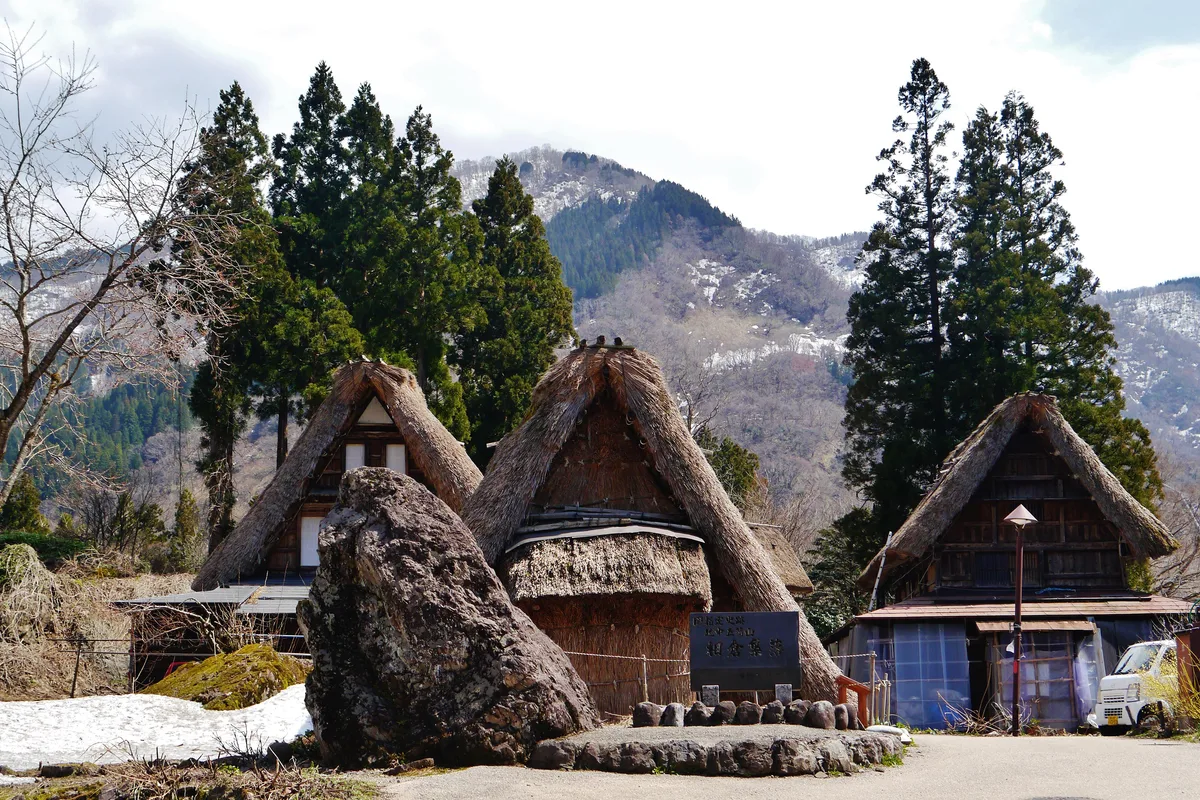
The voices from abroad outside the glad band number 9 (7 in the middle band and 2 let down), and 5 of those 9 say the village is too small or that there is not much to see. A TripAdvisor reviewer who visited Suganuma in February 2015 wrote "the village is really quite small, featuring nine gassho houses", spent less than 20 minutes there, and added that "many of the cafes were actually closed". One in April 2017 wrote "This is one of the smallest village and not much to see." and, in the same review, that it was "less touristy" and "very quiet and serene". Another April 2019 reviewer wrote "Unless you have your own transport and a full day, otherwise, just head straight to Shirakawago." and also "If you like to avoid crowds and just want to see and photograph gasso house, this is a good place." A Taiwanese forum poster in November 2024 wrote that Ainokura was fine to visit but Suganuma was small enough to skip. A Google Maps reviewer who posted in August 2026, writing in French, called Suganuma of no interest, run down, abandoned, broken and small, and said it was not worth the 1,000 yen entrance fee. The official page lists 1,000 yen as the parking fee. This French review sits in the let-down band, and so does a Google Maps review of Ainokura posted in October 2026 and written in Chinese, whose writer wrote that the houses are run down and that prices have gone up.
3 of those 9 wrote about not going inside the houses or about too little information on site. A TripAdvisor reviewer who visited Ainokura on a bus tour in September 2019 wrote "Not much shade in the village and you don't get to go inside any of the houses which made the visit difficult" on a 33-degree day, and spent about 30 minutes there. A TripAdvisor reviewer who visited in May 2015 wrote "there is no information on any western language." 3 of those 9 describe places that were closed or hard to reach because of the season or snow. The April 2017 reviewer wrote "Lots were closed because its spring", and a Taiwanese forum commenter in November 2024 wrote that perhaps because snow had not been cleared in time, many places could not be entered, so the visit lasted one hour.
The voices from Japan outside the glad band number 16 (14 in the middle band and 2 let down), and 7 of those 16 call the village small or compact. A Jalan reviewer who visited in August 2024 wrote "こじんまりとしています。ただ、その分観光客も多くなく、ゆっくりできます。" (It is compact, but for that reason the tourists are fewer and you can take your time). A TripAdvisor reviewer who visited in June 2020 wrote that walking around Suganuma takes under 30 minutes, or about an hour if you go into the paid facilities. 3 of those 16 write about paying parking fees or other charges. A TripAdvisor reviewer who visited in June 2019 wrote "点在してるが故に場所場所によって駐車料金を徴収されるのがマイナス。" (Because the sites are scattered, being charged parking at each place is a minus) and "16:30に立ち寄っても殆どの施設が営業終了していたのも残念。" (It was also a pity that when I stopped by at 16:30 nearly all the facilities had finished for the day). A YouTube commenter called it quite a nice place, and wrote of being asked for a fee before entering the parking lot: "昔は無料でのんびりとしていました。今は観光地化でどこか落ち着かない。" (It used to be free and relaxed. Now it has become touristy and somehow unsettled).
2 of those 16 write about places that were already shut when they arrived late in the afternoon. A TripAdvisor reviewer who arrived at Suganuma in the rain after 16:30 on a September 2026 visit wrote "塩硝の館も土産物屋も閉じられていて、誰にも会いませんでした" (The saltpeter museum and the souvenir shop were both closed, and I met no one). The official notice of August 1, 2026 says the museum closed on July 31 for building repairs. 3 of those 16 write about the season or snow. A Jalan reviewer in November 2020 wrote that the autumn leaves were over and "合掌造りの建物の下も雪ぞなえの波板に覆われ、少し残念でした。" (The lower parts of the gassho buildings were covered with corrugated sheets against the snow, which was a little disappointing). A TripAdvisor reviewer who visited in October 2020 wrote "すでに刈入れは終わって" (the harvest was already over), having hoped for ripened rice. 3 of those 16 write about the meal: the August 2024 Jalan reviewer wrote that the soba at the tea house tasted bad, a TripAdvisor reviewer who visited in August 2022 called the lunch at Suganuma reasonably priced and the taste passable, and a TripAdvisor reviewer who visited in August 2019 wrote of being treated at a restaurant in Ainokura as if they could not eat there, and that the proprietress said the cook was alone on a rainy weekday. The two let-down voices from Japan are that Ainokura one and a TripAdvisor reviewer who visited in May 2021 and wrote of being refused parking at Suganuma when arriving by motorcycle.
What the official pages say
As of November 2026, the official Ainokura page says people still live in the village. The Ainokura page lists the village as open from 8:30 to 17:00 with no closing days. The Suganuma page lists it as open from 8:00 to 17:00 from April to November and from 9:00 to 17:00 from December to March, closed only on December 31 and January 1. Cars can enter the Suganuma parking lot until 16:00, and the Suganuma page asks visitors not to stop by from after sunset to early morning.
The pages list a parking fee, described as a contribution to preserving the village. As of November 2026, the Ainokura page lists 1,000 yen for a car or light car, 3,000 yen for a medium bus or smaller, 5,000 yen for a large bus and 300 yen for a motorcycle. The Suganuma page lists the same, and says the car fee changed from 500 yen on October 1, 2025. Older voices mention 500 yen and newer ones 1,000 yen, and the Ainokura page gives no date for a change. The pages we read do not describe a pass shared between the villages.
For getting there, the pages list the World Heritage Bus stop for Ainokura as a 5-minute walk from the village and the Suganuma stop as a 1-minute walk. A Google Maps reviewer who posted in September 2026, writing in Korean, wrote of walking uphill about 10 minutes from the Ainokura bus stop. A TripAdvisor reviewer who visited Suganuma in April 2016 wrote "We took an elevator from the parking area and walked through a tunnel to reach the village." Three reviewers from abroad put the number of gassho houses at Suganuma at nine, and two others at about ten or fewer than ten, and the pages we read give no count. A notice dated August 1, 2026 on the official site says the Ensho no Yakata saltpeter museum in Suganuma closed on July 31 for building repairs, while the Gokayama Folk Museum and the Suganuma parking lot remained open. The pages we read give no reopening date.
Doing it well, the welcomed way
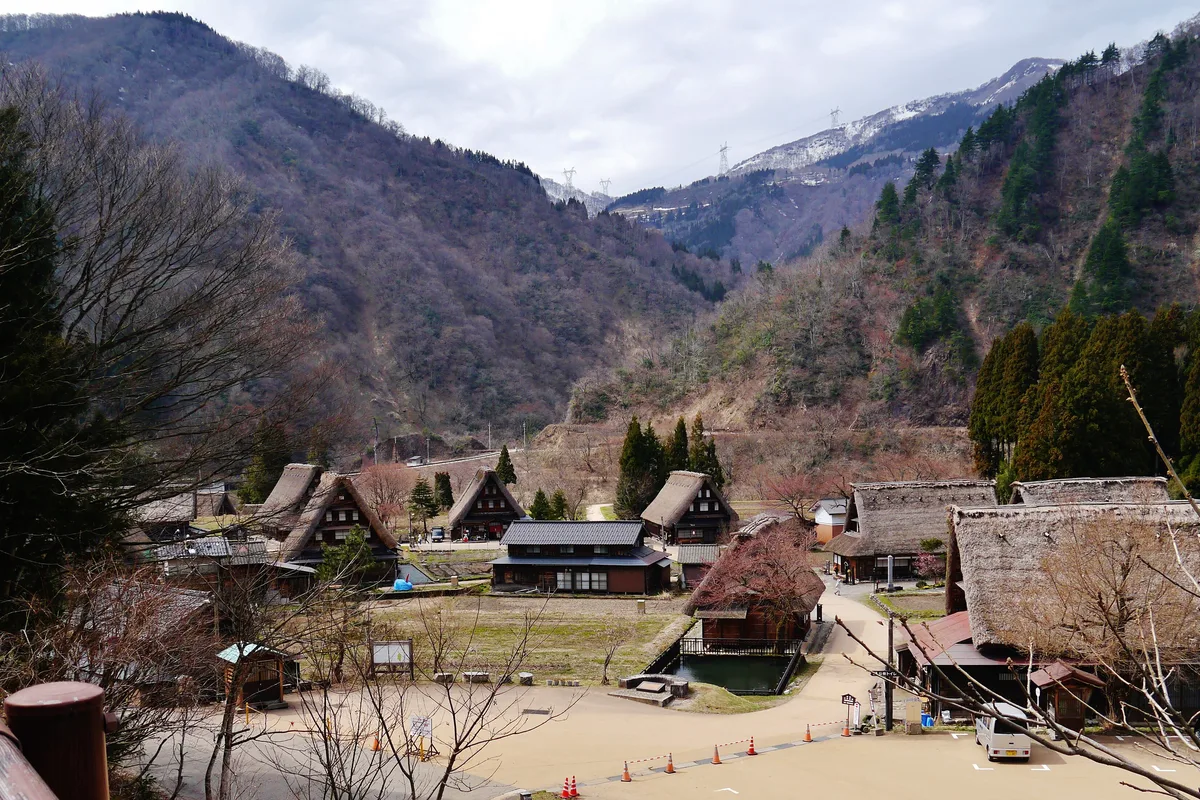
The official Gokayama tourist page invites visitors to stay out of private property, including fields and the space under roof overhangs, to leave plants as they are, to give way to residents' vehicles, to visit in the daytime rather than in the early morning or after dusk, to take photos with other visitors in mind, and to take their trash with them when they leave. It asks that smoking be done only in the designated areas. As of November 2026, that is the Gokayama tourist site's own list of requests to visitors. Two reviewers describe the villages as places where people live: the May 2018 reviewer at Ainokura wrote of a community that "appears to be living their traditional farming life", and one in August 2016 called Suganuma "a true living village".
The Suganuma parking lot takes cars until 16:00. Two Japanese reviewers who stopped by at 16:30 or later, one at Ainokura in June 2019 and one at Suganuma in September 2026, found places shut (the Suganuma museum had closed on July 31 for building repairs).
The official page lists three lighting events for Ainokura in its 2026 series, and as of November 2026 the one remaining is February 20 and 21, 2027, from after sunset to 20:00. The same page lists evenings on January 13 and 27, 2027, from 17:00 to 20:00, when the windows are lit, which it says are not lighting events. On the same event page, it says buses of any size need a reservation to park. A TripAdvisor reviewer who came for a lighting evening in January 2019, without naming the village, wrote "Well worth the trip.", with "plenty of snow", and highly recommended stopping by the spas a couple of times. The January 2019 guesthouse reviewer wrote that in winter the huts and the landscape are blanketed in snow, and the February 2015 reviewer wrote that the lookout at Suganuma may have been hidden behind piles of snow.
On the cost, each village lists its own parking fee. The February 2015 reviewer wrote "The parking pass you get from Ainokura Village does NOT work here." and the June 2019 TripAdvisor reviewer wrote that you are charged at each place.
Planning around the Chubu mountains? Is Shirakawa-go worth it collects voices on the larger village nearby, and is Takayama worth it and is Kanazawa worth it cover the neighboring cities. For how we think about choosing what to do in Japan, see what actually matters.
Sources
- Historic Villages of Shirakawa-go and Gokayama (UNESCO World Heritage List, no. 734): the date of inscription, 1995, and that the property comprises Ogimachi in Shirakawa-go and Ainokura and Suganuma in Gokayama.
- Ainokura Gassho-zukuri Village (相倉合掌造り集落), official Gokayama tourist site: the hours, open from 8:30 to 17:00 with no closing days, the parking fees as of November 2026 of 1,000 yen for a car or light car, 3,000 yen for a medium bus or smaller, 5,000 yen for a large bus and 300 yen for a motorcycle, the World Heritage Bus stop with a 5-minute walk, the address in Nanto, Toyama Prefecture, and that people still live in the village.
- Suganuma Gassho-zukuri Village (菅沼合掌造り集落), official Gokayama tourist site: the seasonal hours, open from 8:00 to 17:00 from April to November and from 9:00 to 17:00 from December to March, parking admission until 16:00, closing only on December 31 and January 1, the request not to stop by from after sunset to early morning, the parking fees and their change on October 1, 2025, and the 1-minute walk from the bus stop.
- Gokayama & World Heritage, official Gokayama tourist site (English): Gokayama as 40 small villages, two of them on the World Heritage list, and the visitor requests on smoking only in designated areas, private property, plants, residents' vehicles, early morning and after dusk, photography and trash.
- The World Heritage Site Ainokura Gassho-zukuri Village Lighting Up Event in 2026, official Gokayama tourist site (English): the lighting evenings of February 20 and 21, 2027, the three lighting events of its 2026 series with the remaining one from after sunset to 20:00, the window-light evenings of January 13 and 27, 2027, from 17:00 to 20:00, and the note that buses of any size need a reservation to park.
- Notice regarding the Suganuma Gassho-zukuri Village Preservation Society, official Gokayama tourist site (English): the notice of August 1, 2026 that the Ensho no Yakata saltpeter museum closed on July 31 for building repairs and that the Gokayama Folk Museum and the Suganuma parking lot were open.
Reviews and posts are voices, so they aren't listed as sources here. The dates are those shown with the reviews and posts (visit months on TripAdvisor and Jalan, posting dates on Google Maps and the forum), so please check the details before relying on them: the visits and posts date from 2010 to 2026, including 2011, 2012, 2014, 2015, 2016, 2017, 2018, 2019, 2020, 2021, 2022, 2023, 2024 and 2025. The official pages' hours, fees and notices are as listed in November 2026 and can change. Fees that reviewers mention (500 yen and 1,000 yen) are their own figures from the years they give, and the official pages above are the current list.
WMJS is written in Japan, in English, with AI help. We check every page, but English is not our first language. If a sentence reads oddly, tell us. One sentence is enough.
Thank you. A person reads every note.
How well do you know Japan?
Built from 635 public posts by Japanese people
Want to know more? Ask Japanese people
Have a follow-up question about this topic? We'll ask real Japanese people.
Voice Box →