Skip to content
WMJS
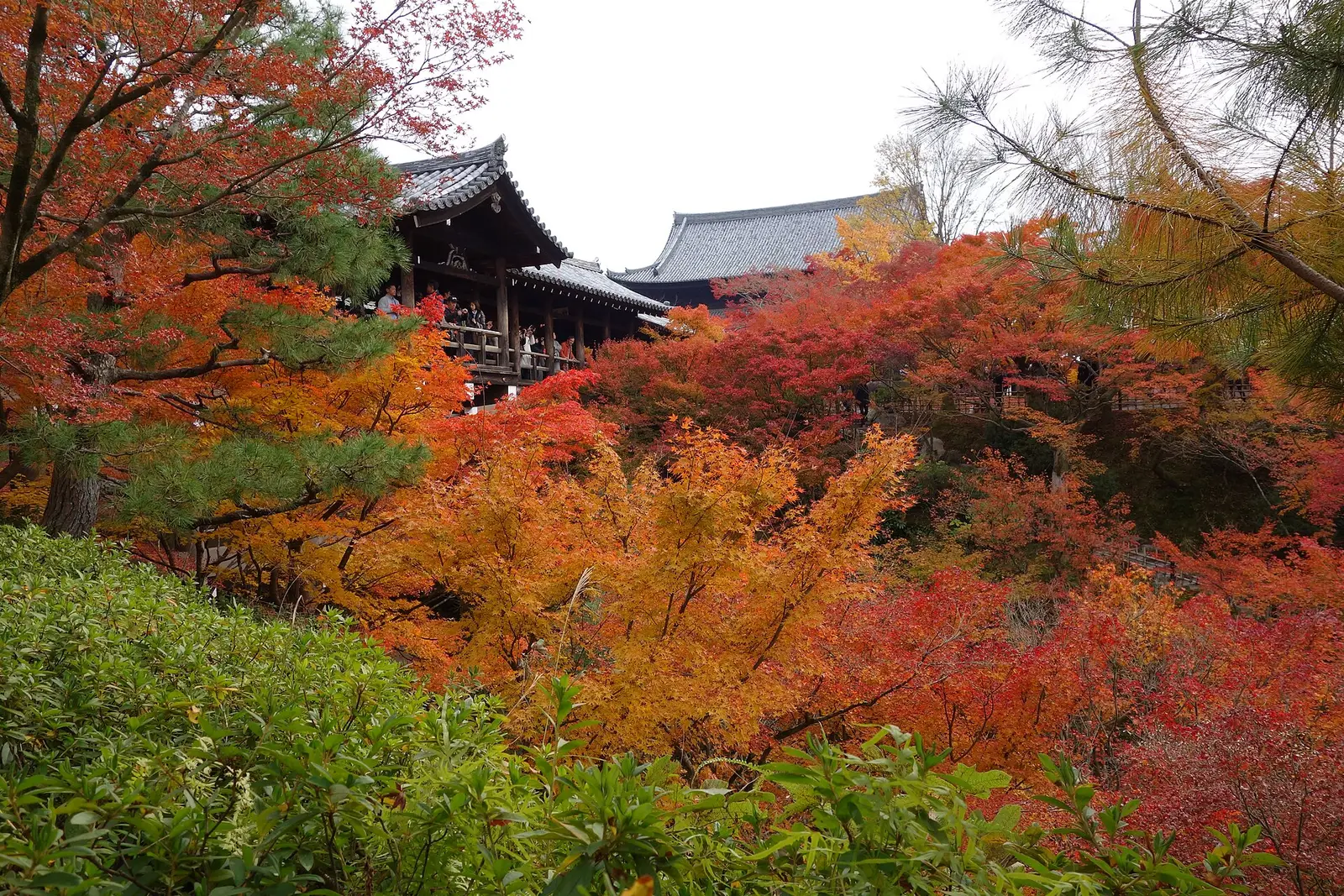
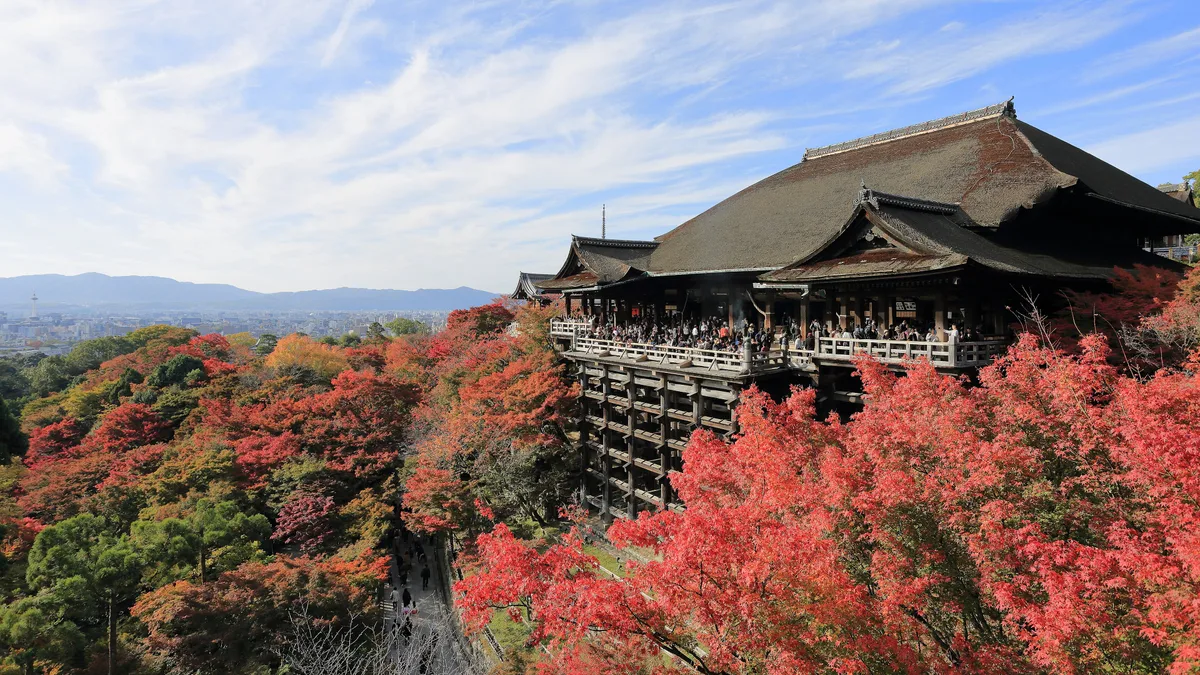
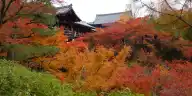
The covered Tsutenkyo bridge of Tofuku-ji temple rising over a valley of scarlet, amber and gold maples in autumn, Kyoto
When to come

Autumn leaves, a trip timed to the colour

Kyoto at peak maple — and how to read the clock the colour runs on, so you stand in it instead of chasing it

Last verified: 2026-06-23

Days
3 in and around Kyoto, timed to the colour — composable, and you can extend out to chase the front north or into the Alps
Best season
Kyoto's city maples peak mid-Nov to early Dec; the mountains above (Takao, Ohara) and Nikko or the Japan Alps turn weeks earlier, mid-to-late Oct
Base yourself
One Kyoto base the whole trip — Kyoto Station for the easiest hops, or Higashiyama to wake up among the eastern temples
Getting around
One IC card taps across JR, the subway, Keihan, the Randen tram and Kyoto buses; a couple of the best spots (Ohara, Takao) are bus-only, and the Sagano scenic train is a separate reserved ticket

Who this plan suits

  • First tripWorks well
  • Been beforeGreat fit
  • With kidsWorks well
  • SoloGreat fit
  • As a coupleGreat fit
  • Gentle paceWorks well
When to goMid-Nov to early Dec

This window is Kyoto's city-temple peak (Tofuku-ji, Eikando, the Arashiyama gardens). Come in late October or early November and the basin may still be green — but the mountains above and Nikko or the Japan Alps are already turning, so the plan points you up. Arrive mid-December and the city's peak is passing, with colour lingering longest in the sheltered southern gardens.

Coming to Japan for the autumn colour is a little different from any other trip: you're not really choosing a place, you're chasing a moment. The good news is that the moment runs on a schedule people here have read for a thousand years. Autumn doesn't fall on Japan all at once — it pours down it, starting high in the mountains and far in the north in October, and reaching the city basins last, through the back half of November. Read that clock and the whole season opens up: you point your trip at wherever the colour is, instead of hoping it shows up where you are.

So before anything else, look at your dates. Booked late October or the first days of November? Kyoto's city maples will likely still be green — but that's a signpost, not a loss: the colour is already blazing higher up and further north, so the plan below leans you toward the mountains (Kyoto's own Takao and Ohara, or out to Nikko and the Japan Alps). Landed mid-to-late November into the first week of December? You're on Kyoto's moment — the temple gardens this trip is built around are exactly what the season was climbing toward. Coming mid-December or later? The city's peak is passing, but the colour doesn't vanish; it lingers longest in the sheltered, low-lying southern gardens — a quieter, gentler end, with the crowds long gone.

I'd base in Kyoto for all of it — it's dense with famous maple temples, and everything below is a short hop away. One last thing, because it's the question everyone asks: yes, the famous spots get crowded. But when we gathered what hundreds of Japanese people actually say about koyo season, the most common feeling wasn't pride — it was that they're worn out by the crowds too, and many simply go early or slip to the quieter edges. That's the whole secret, and it's the same clock at a smaller scale: a wall of phones at midday, a near-empty path at opening. I'll lay out how I'd move; pull it apart and rebuild it however your trip wants to go.

Where to base yourself

I'd keep one Kyoto base for the whole trip and let the colour come to me — every spot below is a short ride from the center. The real question for an autumn trip isn't which city, it's how early you can be out the door, because the single biggest difference between a serene maple morning and a crush is the hour on the clock, not the place.

If I wanted the simplest mornings, I'd base near Kyoto Station. It's the hub every line runs through, so Tofuku-ji is one stop south, the JR Sagano Line carries you straight out to Arashiyama, and the buses for Takao and Ohara leave from right outside. When you're trying to catch a temple gate the moment it opens, not having to transfer first is worth a lot.

If I wanted to step out of the hotel already inside the colour, I'd stay in Higashiyama, on the eastern hills. You'd be walking distance to the Kiyomizu-dera slopes and the Nanzen-ji/Eikando maple cluster — close enough to be standing under the trees before the first bus-loads arrive, and close enough to wander back out for an evening illumination without planning a journey around it.

Either way, the move that matters is dawn. The temples that feel impossible at noon — Tofuku-ji's bridge, Arashiyama's grove — are calm and astonishing in the first hour, and they're the exact hours the locals quietly keep for themselves. Set an early alarm for one or two of them and you'll see a Japan the crowded photos never show.

Getting around & tickets

Sort an IC card first and you can mostly stop thinking about tickets. It's a prepaid tap card — touch it entering and leaving a station and the fare is handled for you — and Kyoto's lines all take it: JR, the Municipal Subway, Keihan, the little Keifuku 'Randen' tram, and the Kyoto City and Kyoto Bus networks. Kansai's home card is ICOCA, but a Suica or PASMO from Tokyo works here too; they're all interoperable. That single tap covers every temple-access leg in this trip.

A few autumn-specific things worth knowing:

Some of the best maples are bus-only. Ohara and Takao sit up in the hills with no train to them — they're reached by Kyoto Bus and JR Bus respectively, and in foliage season the operators add extra services because they know the demand is coming. Your IC card taps onto these buses; just allow more time than a train hop, and aim for an early one.

The Sagano Romantic Train is the exception to the tap card. That scenic ride through the Hozu ravine is a reserved, seat-ticketed attraction, not an IC-fare line — and in autumn it sells out, so I'd book a seat ahead rather than turn up hoping. (See the fact box for its season and how to reserve.)

Do you need a rail pass? For a Kyoto-anchored maple trip, usually not — the hops are short and several run on non-JR lines and buses a JR pass won't cover. On a bus-heavy Kyoto day the city's own subway-and-bus day pass can pay for itself instead; I've left the durable details to the fact boxes and the official sites, since prices shift.

Kyoto's eastern temples, before the phones

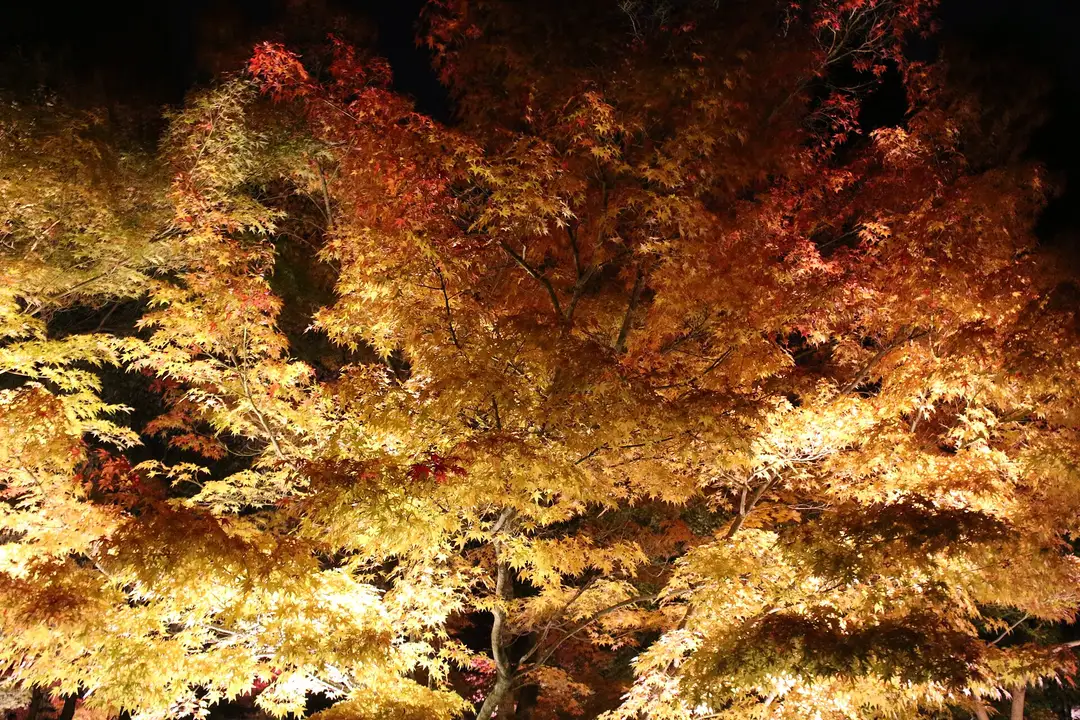
Maples glowing gold and amber under evening illumination at Eikando (Zenrin-ji), Higashiyama, Kyoto

Day one I'd run on the clock's smallest hand — the hour. The eastern hills hold Kyoto's most famous maples, which means they hold its biggest midday crowds, so the whole day is built around being early. We'd open at Tofuku-ji, where a wooden bridge floats over a valley that turns solid scarlet and gold — one Japanese visitor described being 'jostled in a sea of people' there at peak, and they're right, so we go at the gate. From there the day climbs the Higashiyama slopes to Kiyomizu's terrace, drifts north along a canal lined with colour, and ends, gently, under the lit maples of Eikando as the evening illumination comes on.

  1. 07:30Tofuku-ji, at openingKyoto Station to Tofukuji Station is one short stop on the JR Nara Line (Keihan also stops there), then a few minutes on foot. The famous view is the Tsutenkyo bridge over the maple ravine — but at peak the temple asks visitors not to stop for photos on the bridges themselves to keep the crowd moving safely, so shoot from the garden below and let the bridge be a place you walk. Arrive at the gate and the valley is almost yours. (Tofuku-ji has no WMJS guide yet.)
  2. 10:30Up to Kiyomizu-deraOver to the Higashiyama slopes — a Kyoto City Bus toward the Kiyomizu-michi stop, then the uphill souvenir lanes, or Keihan to Kiyomizu-Gojo and walk up. The great wooden stage juts out over a ravine of maples; in autumn the whole hillside below the terrace turns. Linked guide: Kiyomizu-dera.
  3. 14:00Nanzen-ji's aqueduct and the canal northNorth through Higashiyama to Nanzen-ji, where a Meiji-era brick aqueduct strides through the temple grounds under the maples — then follow the Philosopher's Path canal on foot, red leaves on the water the whole way. No transit needed; this is the slow, walking middle of the day.
  4. EveningEikando, the maples litEikando (Zenrin-ji) has been called 'the Eikando of maples' for centuries, and in autumn it runs an evening illumination — the grounds and pond glowing amber after dark. Subway Tozai Line to Keage and a short walk, or a city bus to the Eikando-michi stop. Check the temple's official site for this year's light-up hours. (Eikando has no WMJS guide yet.)

Arashiyama and Sagano, the quieter lanes

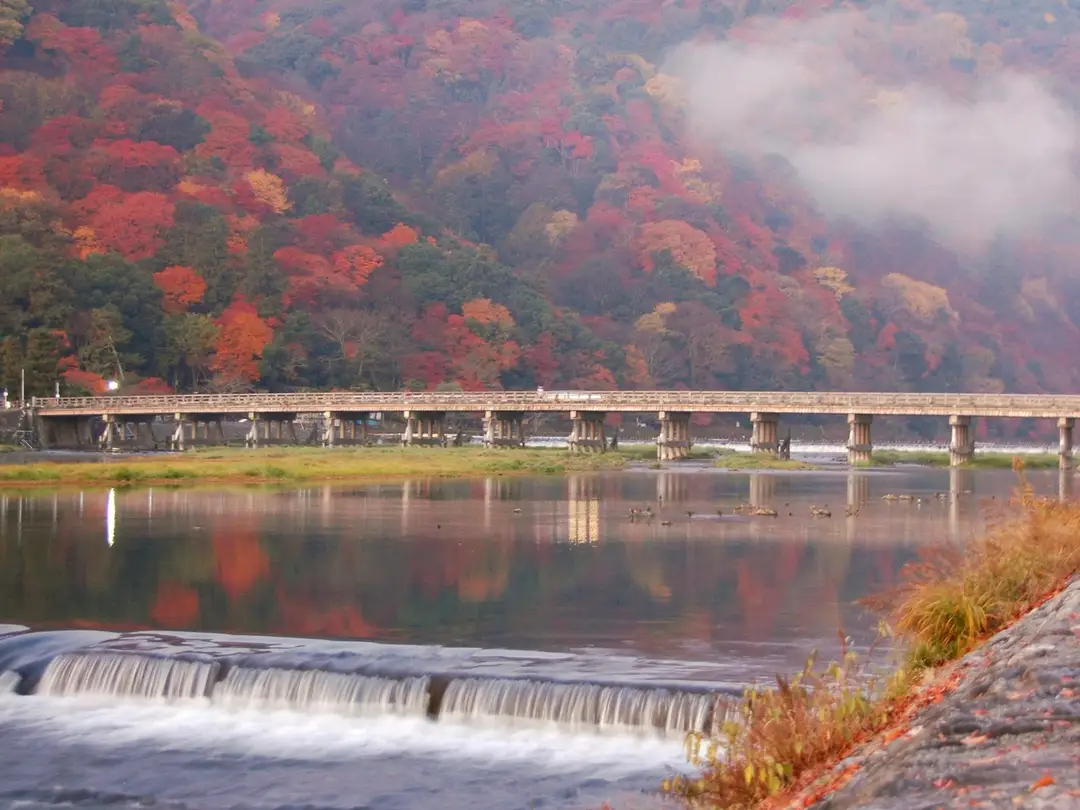
The Togetsukyo bridge over the Hozu river with the autumn-coloured Arashiyama mountainside and morning mist behind, Kyoto

Day two moves west, and here the clock's lesson is about place: everyone funnels to the one bridge and the one grove, so the reward is in going early and then stepping one lane over. We'd open Tenryu-ji's garden the moment the gate lifts — a pond with the whole Arashiyama mountainside borrowed behind it, ablaze — cross the Togetsukyo while the river still holds morning mist, and then climb up into the upper Sagano temples that most of the crowd never reaches. In the afternoon, a little scenic train carries the colour past your window through a river gorge.

  1. 08:00Tenryu-ji garden, at the early openingJR Sagano (San-in) Line to Saga-Arashiyama, then a short walk. In foliage season Tenryu-ji opens its garden earlier than usual — worth catching, because its pond-and-borrowed-mountain view is one of Kyoto's great autumn compositions and it fills fast. Linked guide: Arashiyama.
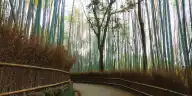
  2. 09:30Togetsukyo and the bamboo, earlyThe Togetsukyo bridge looks back on a mountainside of red and gold; cross it early for the mist on the water. The bamboo grove is a few minutes away and is another go-at-dawn place — by mid-morning it's shoulder to shoulder. Linked guide: Arashiyama.
  3. 11:00Upper Sagano's quiet maplesOn foot up into Sagano: Jojakko-ji on its hillside and Nison-in along its maple-roofed approach are where Kyoto people go to escape the main drag — the same colour, a fraction of the crowd. This is the connoisseur's half of Arashiyama. (These temples have no WMJS guide yet.)
  4. AfternoonThe Sagano scenic train through the gorgeThe Sagano Romantic Train (a small open-window scenic line) runs along the Hozu river ravine, the colour close enough to touch. It's a reserved seat ticket, not an IC tap, and in autumn it books out — reserve ahead. See the fact box for its season and booking. (No WMJS guide yet.)

Up the mountain, the colour's early edge

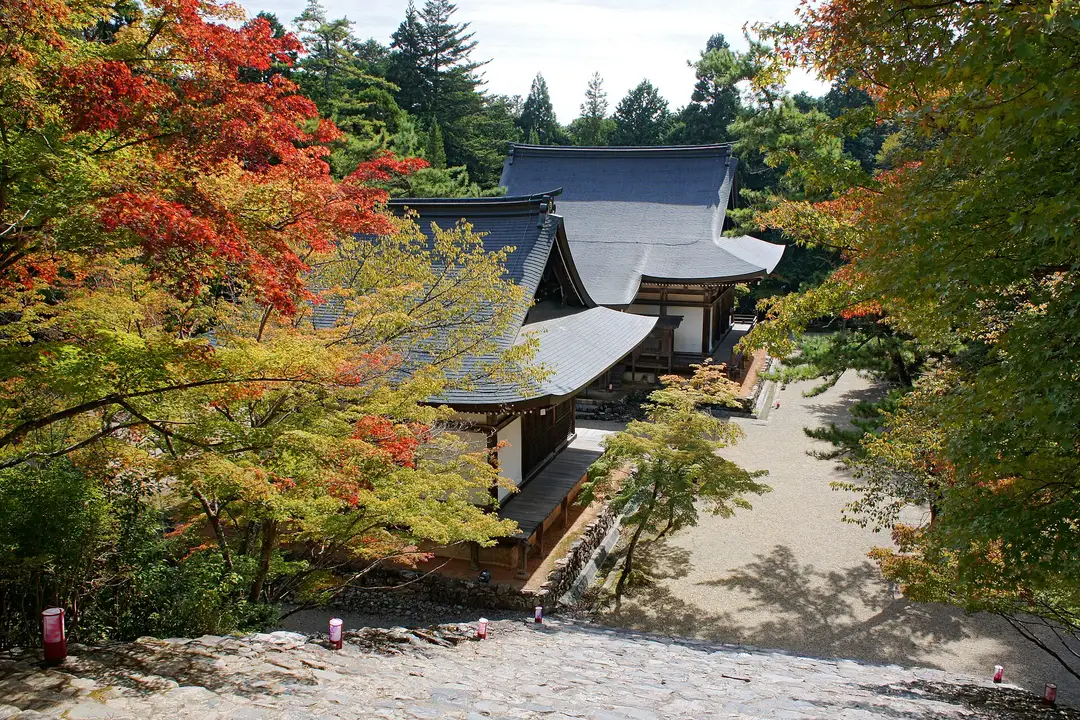
A temple hall at Jingo-ji on Mt Takao framed by reddening maples on a wooded mountain slope, northwest Kyoto

Day three reads the clock's biggest hand — elevation. Go up, and you step back on the calendar: the high ground above Kyoto turns a week or two before the city basin, so a morning in the hills can put you in full colour while the downtown temples are still going. I'd offer two directions, and neither is the 'right' one — they just suit different moods. Both are bus rides up out of the city, so they ask for an earlier start and a little patience, and they give back quiet mountain temples most visitors never reach.

  1. Morning — option oneTakao and Jingo-jiNorthwest into the hills by JR Bus to the Yamashiro-Takao area — one of the earliest-turning maple spots near Kyoto, so it's the pick if your dates run early. Steps climb to Jingo-ji's halls among the trees, and from a clifftop platform people throw little clay discs out over the gorge for luck. Extra buses run in foliage season. (No WMJS guide yet.)
  2. Morning — option twoOhara and Sanzen-inNorth up a quiet valley by Kyoto Bus to Ohara, where Sanzen-in's moss gardens — with small stone Jizo figures tucked in the green — colour about a week ahead of central Kyoto. A gentler, more rural morning than Takao's climb. (No WMJS guide yet.)
  3. AfternoonBack to the basin, looselyRide back down and let the afternoon stay open — a city temple still holding its colour, or a second evening illumination (Kodai-ji and Kiyomizu both light up in autumn). After a mountain morning, I'd resist filling it; a slow cup of something warm watching the light go is its own part of the season.

If you have one more day

+1 day

If your dates run early — or you just want to follow the colour rather than wait for it — the front is always blazing somewhere, and chasing it is the whole connoisseur's game.

North to Nikko, above Tokyo. It sits high, so the Oku-Nikko highlands, Lake Chuzenji and the Irohazaka switchbacks turn around mid-to-late October, and the shrine town a little after — the same 'mountains first' clock, weeks ahead of Kyoto. A clean handoff to a Kanto trip re-led by colour.

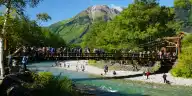
Into the Japan Alps. Kamikochi's valley of golden larch peaks mid-to-late October — but the whole resort closes for winter in mid-November, so it's strictly an early-window treat (mind the closing date in the fact box).

Or Korankei, a gorge of some four thousand maples near Nagoya that holds its colour right across November, with evening light-ups along the river. Each of these is the same season read at a different altitude — pick the one that matches your dates.

If you're short a day

−1 day

Short on time, the trip keeps its heart at two days: Day 1's eastern temples and Day 2's Arashiyama are the core, and I'd let the mountain day go. If you've only got a single day, I'd spend it on one dawn — Tofuku-ji or Tenryu-ji as the gates open — and one evening illumination, and call it a perfect day rather than a rushed three. The season rewards being fully present in one blazing place far more than collecting five of them at a jog.

Extend from here

Onward

This block is really the Kansai route plan wearing its autumn coat — the same Kyoto temples, led by the colour instead of the map — so it folds straight into a longer Kansai loop with Nara and Osaka whenever you want more days.

East, the Tokaido Shinkansen reaches Tokyo and the Kanto plan in a couple of hours, where the great city gardens (and Nikko above them) carry the colour later into the season with their own evening light-ups. Inland, the Chubu plan and the Japan Alps hold the early, high-mountain end of the front. Wherever you point, you're reading the same clock — just at a different latitude and height.

Good to know — fares & times

The colour is a clock
Autumn colour begins in the colder north and at high elevation and moves south and down over the season. In each region the mountains colour first, then the leaves spread into city gardens, parks and temples — which is why Kyoto's basin turns last.
Kyoto city temples — peak window
The Kyoto basin (Tofuku-ji, Eikando, the Arashiyama gardens) typically peaks roughly mid-to-late November into the first week of December — the latest, lowland hand of the front.
Ohara / Sanzen-in — earlier than the city
Higher, cooler northern Kyoto: Ohara bursts into colour about one week ahead of the rest of Kyoto — the early hand of the same clock.
Takao / Jingo-ji — earliest near Kyoto
The Takao hills northwest of the city are among the earliest-turning maple areas near Kyoto (late October into November), ahead of the basin — the pick when your dates run early.
Kyoto to Tofuku-ji
JR Nara Line or Keihan to Tofukuji Station, ~1 stop / a couple of minutes from Kyoto Station, then a ~10-minute walk. IC card OK. Confirm current times via the official site / JR route search.
Tofuku-ji at peak — the bridge rule
In the late-November peak the temple stations staff and asks visitors not to stop to take photos on the Tsutenkyo and Gaunkyo bridges, to prevent dangerous congestion. Shoot from the garden instead. Check the temple's official site for the current year's dates.
Kyoto to Eikando (Zenrin-ji)
Subway Karasuma Line to Karasuma-Oike, change to the Tozai Line to Keage, then a ~15-minute walk; or City Bus Route 5 to the Nanzenji-Eikando-michi stop. IC card OK. Confirm via the official site.
Eikando — autumn evening illumination
Famed as 'the Eikando of maples,' the temple runs an autumn evening light-up of its grounds during the foliage season — a long-standing practice. The official site lists the current year's period and hours.
Kyoto to Arashiyama / Tenryu-ji
JR Sagano (San-in) Line to Saga-Arashiyama (~15-17 min), then ~13 min on foot to Tenryu-ji (or ~5 min from the Randen tram). IC card OK. Confirm via JR route search / the official site.
Tenryu-ji — autumn early opening
During the foliage season (roughly mid-to-late November) Tenryu-ji opens its garden earlier than the usual 08:30. The official site posts the current year's special early-opening times.
Sagano Romantic Train — season & reservations
The Sagano Scenic Railway runs roughly March 1 to December 29 (suspended deep winter; usually closed Wednesdays, but runs daily in peak seasons including autumn). One-way ~25 min. It is a reserved seat ticket, NOT an IC fare — reserve ahead in autumn. Confirm the calendar on the official site.
Kyoto to Takao / Jingo-ji
JR Bus (Takao-Keihoku Line) from JR Kyoto Station to the Yamashiro-Takao stop, ~50 min, then a walk up/down to Jingo-ji. Extra buses run in foliage season. IC card OK on the bus.
Kyoto to Ohara / Sanzen-in
No rail to Ohara. Kyoto Bus #17 direct from Kyoto Station (~60 min), then a ~10-min walk uphill to Sanzen-in; or the Karasuma Subway to Kokusaikaikan then Kyoto Bus #19 (~20 min). IC card OK on the bus.
IC cards across Kyoto
One IC card (ICOCA / Suica / PASMO, all interoperable) taps onto JR, the Municipal Subway, Keihan, the Keifuku/Randen tram and Kyoto City/Kyoto Bus — every temple-access leg here. The Sagano Romantic Train is the exception (a separate reserved ticket).
Chase the front — Nikko by train
An early-window option north of Tokyo, weeks ahead of Kyoto: Tobu Limited Express SPACIA runs Asakusa to Tobu-Nikko direct in about 1 hour 50 minutes (reserved limited-express ticket on top of the base fare). IC card OK on the base fare.
Chase the front — Korankei
A gorge of about 4,000 maples near Nagoya (Toyota City), reached by rail + bus; the colour peaks across November, with an evening illumination. Its official Maple Festival runs the full month.
Chase the front — Kamikochi closes early
The Japan Alps valley of golden larch peaks mid-to-late October, but the area is open only mid-April to mid-November — buses and facilities run through Nov 15 and close from Nov 16. An early-window-only destination.
Leave the leaves
In Japan's national parks the guidance is simple: don't take plants, stones or anything else home, and carry your trash out — so the people after you find the same scene. A fallen leaf cupped in your hand to admire is a loved little ritual; a branch snapped off a living tree is what quietly hurts.

Go deeper

Kiyomizu-dera — ทำไมผู้คนจึงปีนเนินขึ้นไปยืนบนหน้าผาเพื่ออธิษฐาน
8 min· 5 ch
ก่อนออกเดินทางระหว่างเดินเที่ยว

Kiyomizu-dera — ทำไมผู้คนจึงปีนเนินขึ้นไปยืนบนหน้าผาเพื่ออธิษฐาน

วัด Kiyomizu-dera แห่งเกียวโต เวทีไม้ลอยฟ้าไร้ตะปู น้ำตก Otowa และเส้นทางเนิน Sannenzaka คู่มือฉบับอบอุ่นพร้อมเวลาเปิดและเคล็ดลับหลบฝูงชน

Kiyomizu-dera Temple
Arashiyama — เหตุใดญี่ปุ่นจึงจัดป่าไผ่แห่งนี้ไว้ในรายชื่อ "เสียง" ที่ควรค่าแก่การรักษา
13 min· 6 ch
ก่อนออกเดินทางระหว่างเดินเที่ยว

Arashiyama — เหตุใดญี่ปุ่นจึงจัดป่าไผ่แห่งนี้ไว้ในรายชื่อ "เสียง" ที่ควรค่าแก่การรักษา

คู่มือเสียง Arashiyama: เดินจากสะพาน Togetsukyo สะพานข้ามจันทรา ผ่านสวนของ Tenryu-ji ที่ "ยืม" ภูเขามาเป็นกำแพงด้านหลัง สู่ป่าไผ่แห่ง Sagano—หนึ่งใน 100 ภูมิทัศน์เสียงของญี่ปุ่นที่ควรค่าแก่การรักษา หลับตาฟังเสียงลม เดินเลยฝูงชนออกไปสักหน่อย แล้วค้นพบความเงียบสงบที่กล้องจับไว้ไม่ได้

Arashiyama

นิกโกโทโชกุ — เหตุใดทั้งชาติจึงปกคลุมผืนป่าด้วยทองคำเพื่อชายคนเดียว
9 min· 5 ch
ก่อนออกเดินทางระหว่างเดินเที่ยว

นิกโกโทโชกุ — เหตุใดทั้งชาติจึงปกคลุมผืนป่าด้วยทองคำเพื่อชายคนเดียว

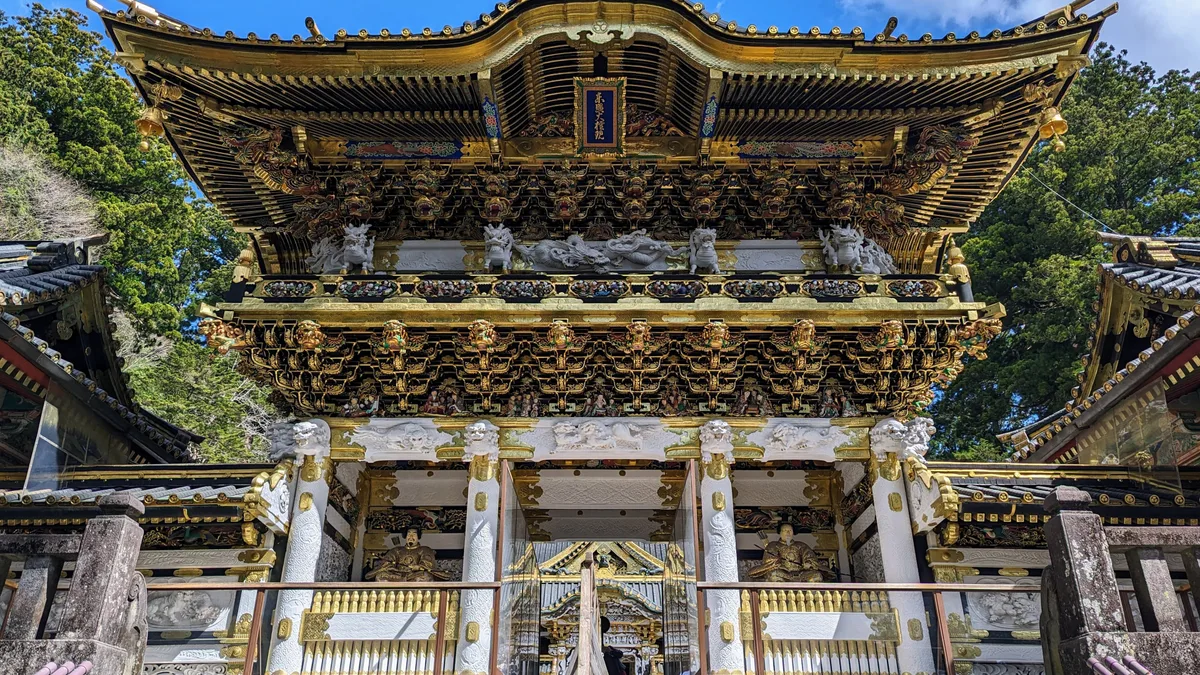
ไกด์เสียงเชิงวัฒนธรรมสู่นิกโกโทโชกุ โชกุนผู้กลายเป็นเทพ ลิงสามตัว ตรวจสอบกับแหล่งข้อมูลทางการ พร้อมวิธีเดินทางและเข้าชม

Nikko Toshogu